

Hair Changes After Menopause with Dr. Leena Ramani in Palm Beach, FL
Advanced Solutions for Healthier, Fuller Hair and Renewed Confidence
Menopause can bring about a lot of different changes. One shift that many women notice is what’s happening on their heads: hair that suddenly starts to feel thinner, drier, and just different than it used to be. Hair changes after menopause are incredibly common, and while they can feel unsettling, they’re also something you can understand and manage with the right guidance.
Board-certified dermatologist and hair specialist Dr. Leena Ramani will break down why these changes happen, what’s considered normal, and treatments or holistic approaches to keeping your hair looking and feeling its best.
To learn more about Dr. Ramani’s approach to hair changes after menopause, schedule your consultation by calling (561) 486-8400 or by completing our online consultation form.
Quick Links
What Causes Hair Changes After Menopause?
As women move through menopause, one of the biggest shifts that happens is a change in hormonal levels, especially estrogen. Estrogen plays a surprisingly important role in keeping hair in its growth phase longer, supporting thickness, shine, and overall fullness. When estrogen levels drop, the hair cycle naturally shortens, and strands may become finer, grow more slowly, or shed more easily. At the same time, the balance between estrogen and androgens changes. Even though androgen levels don’t necessarily rise, they can have a stronger effect as estrogen declines. For some women, this can lead to more noticeable hair thinning along the part or temples. Put simply, menopausal hair changes are the result of a perfect storm of hormonal shifts, natural aging, and individual biology.
Other factors that can contribute include:
- Aging of the hair follicles
- Slower cell turnover
- Stress and sleep changes
- Medications
- Genetics

Is Menopausal Hair Loss Permanent?
The short answer is, not always. Many women assume that once their hair starts thinning after menopause, there’s no hope for improvement, but that’s not necessarily true. While hormonal changes can create long-term shifts in hair density and texture, the follicles themselves don’t suddenly stop working once menopause begins. For many women, hair loss during this stage is partly reversible. Once the body adjusts to its new hormonal network, shedding slows, and some fullness may return. That being said, the degree of regrowth varies from person to person and depends on factors like genetics, overall health, treatments used, and how early the changes are addressed.
Common Hair Changes During and After Menopause
Every woman’s experience with menopause is unique, but when it comes to hair, there are a few signs that show up again and again. Some are subtle, others are more noticeable, and all of them can feel confusing if you’re not prepared or expecting them. Here are the most common hair changes women report:
- Thinning along the part or crown
- Increased shedding
- Finer, shorter, or slower-growing strands
- Dryness and brittleness
- Changes in texture
- Receding at the temple
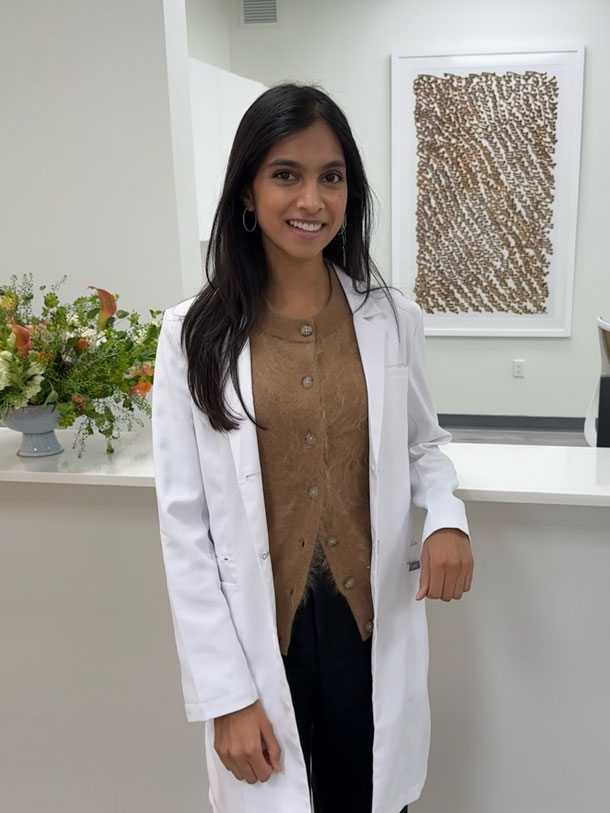
Meet Dr. Ramani
Experience elevated dermatologic care with Dr. Leena Ramani, a board-certified dermatologist and fellowship-trained hair transplant surgeon serving Palm Beach County. Known for her artistic eye and advanced expertise in both skin and hair restoration, Dr. Ramani blends evidence-based medicine with a refined aesthetic approach to deliver natural, timeless results.
Whether you’re seeking treatment for hair loss, skin conditions, or cosmetic enhancements, her patient-centered philosophy ensures personalized care in a calm, luxurious setting. Schedule your consultation today to discover how expert dermatology and artistry come together to help you look and feel your most confident.





When to See a Dermatologist or Hair Specialist
It’s completely normal to notice some changes in your hair during and after menopause, but there are times when getting a professional opinion can make a big difference. You don’t have to wait for things to feel severe before reaching out; in fact, the earlier you receive guidance, the more likely it is that it will lead to better outcomes and more peace of mind.
You may want to schedule a visit if you’re experiencing:
- Thinning that gets progressively worse
- Shedding that lasts for several months
- Bald patches, widening gaps, or visible scalp
- Changes in hair texture or breakage
- Itching, flaking, or discomfort
- A family history of hair loss
Getting a dermatologist’s or hair specialist’s opinion can help determine what’s truly related to menopause and what might be caused by something else, like thyroid issues, nutritional shifts, or hereditary hair thinning. With the right evaluation, you’ll get clarity, reassurance, and a personalized plan to support healthier, fuller-looking hair.
Treatment Options for Hair Changes After Menopause
The good news is that menopausal hair changes aren’t something you just have to accept. There are many ways to support healthier, fuller-looking hair. Dr. Leena Ramani works closely with women, navigating these changes and helping them understand which options are most appropriate for their unique situation.
Dr. Leena Ramani offers a range of evidence-backed treatments tailored to the unique needs of women experiencing hair loss during and after menopause. Depending on your goals and contributing factors, she may recommend:
- Topical Treatments: Topical treatments, including custom prescription formulas or peptide-based serums, can help support follicle activity, improve scalp health, and encourage healthier-looking hair growth when used correctly and consistently.
- Oral Medications or Nutraceuticals: Oral medications or nutraceuticals like Xtressé™ Hair Growth Gummies target internal factors that influence hair thinning, including hormonal issues and nutritional deficiencies. Xtressé is a next-generation nutraceutical supplement designed to support healthier, stronger hair by nourishing the follicles and decreasing inflammation at a cellular level. Prescription medications may be recommended to block direct hormonal contributors to hair loss during menopause.
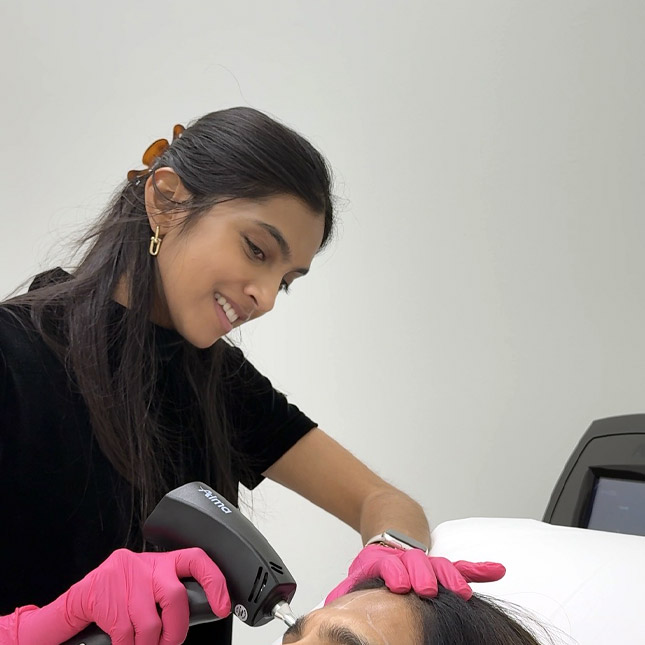
- Alma TED™: Alma TED™ is a non-invasive treatment that uses soundwave technology to enhance the absorption of proprietary hair growth serums containing peptides and growth factors into the scalp, promoting thicker, stronger hair.
- Red Light Therapy: A gentle, non-invasive option, red light therapy uses light energy to stimulate follicles and promote gradual regrowth.
- Hair Restoration Procedures: For patients who may benefit from surgical or advanced hair restoration techniques, Dr. Ramani offers advanced specialized follicular unit extraction (FUE) and follicular unit transplantation (FUT) surgical graft placement for natural-looking results.
How Does Hormone Replacement Therapy (HRT) Affect Menopausal Hair Loss?
Hormone replacement therapy, or HRT, can affect hair in different ways:
- Estrogen-based HRT may help stabilize hair: Estrogen can support the hair growth cycle and may help slow hair thinning in some women.
- Certain progestins can have androgenic effects: Some progesterone formulations used in HRT can act more like androgens (“male hormones”), which may increase follicle miniaturization in people who are genetically predisposed to hair loss.
- Hormonal shifts can temporarily trigger shedding
Any hormonal change – including starting or adjusting HRT – can sometimes trigger Telogen Effluvium, which causes temporary increased shedding.
During menopause, declining estrogen levels can contribute to thinning hair and conditions like Female Pattern Hair Loss (also called Androgenetic Alopecia). Estrogen normally helps prolong the anagen (growth) phase of the hair cycle, so when levels drop, hair follicles can gradually miniaturize. Ultimately, hormone replacement therapy (HRT) can sometimes make menopausal hair loss worse, depending on the type of hormones used and an individual’s sensitivity to androgens. A visit with Dr. Leena Ramani can help you determine if your hair loss is related to HRT or other causes.
Why Choose Dr. Leena Ramani for Menopausal Hair Loss Treatment?
Navigating hair changes during and after menopause can feel overwhelming, but you don’t have to figure it out on your own. Dr. Leena Ramani brings a thoughtful, compassionate, and evidence-based approach to helping women understand what’s happening with their hair and the options available to them to address it.
Dr. Ramani has extensive experience working with women who are experiencing menopausal hair thinning, shedding, and textural changes. She understands how hormonal shifts, aging, and genetics intersect, and she uses that knowledge to guide patients with clarity and reassurance.
No two women experience menopause the same way, and Dr. Ramani takes the time to understand each patient’s unique concerns, goals, and lifestyle. Her recommendations are tailored to each patient, so they feel fully supported and confident in their plan.
Schedule Your Consultation with Dr. Leena Ramani in Palm Beach, FL
Menopausal hair loss can be frustrating, but you don’t have to navigate it alone. Dr. Leena Ramani is here to help you understand what’s happening and explore options that may support healthier, fuller-looking hair.
If you’re ready for clarity, reassurance, and a personalized plan, schedule your consultation with Dr. Ramani by calling (561) 486-8400 or by completing our online consultation form. Together, we can take meaningful steps toward feeling confident and healthy in your hair and in yourself.
Menopausal Hair Loss FAQs
Can menopause cause hair to grow in new places?
Yes, some women notice increased facial hair, especially on the chin or upper lip, during and after menopause. This happens because the balance between estrogen and androgens shifts, allowing androgens to have a stronger influence on hair growth patterns.
Does stress make menopausal hair loss worse?
Stress doesn’t cause menopause hair loss, but it can contribute to increased shedding. Many women experience a type of temporary hair loss called telogen effluvium during stressful periods, which can overlap with menopausal changes and make thinning more noticeable.
Can hair color or chemical treatments affect menopausal hair?
Hair often becomes drier and more fragile after menopause, which means coloring, bleaching, or chemical straightening may cause more breakage than before. Choosing gentler techniques, strengthening shampoos and conditions, or spacing out treatments can help protect the hair.
How long does menopausal hair loss typically last?
There’s no universal timeline, but many women notice the most significant changes in the years surrounding menopause. Once hormone levels stabilize, shedding may slow, though some women continue to experience gradual thinning related to aging or genetics.
Can exercise or lifestyle habits improve menopausal hair loss?
Healthy habits like regular exercise, balanced nutrition, and good sleep won’t reverse menopause, but they can support overall hair health. These habits help reduce stress, improve circulation, and create a better environment for hair growth.