

FUT Hair Restoration Vs. FUE Hair Restoration in Palm Beach, FL with Dr. Leena Ramani
At Palm Beach Skin & Hair Restoration, Dr. Leena Ramani believes informed patients achieve the best outcomes. While Follicular Unit Excision (FUE) has become widely known, Follicular Unit Transplantation (FUT) remains a valuable and effective technique for the right candidates.
As a female board-certified dermatologist and fellowship-trained hair restoration surgeon, Dr. Ramani offers both methods with precision, artistry, and transparency – helping you make the choice that best fits your goals, hair type, and lifestyle.
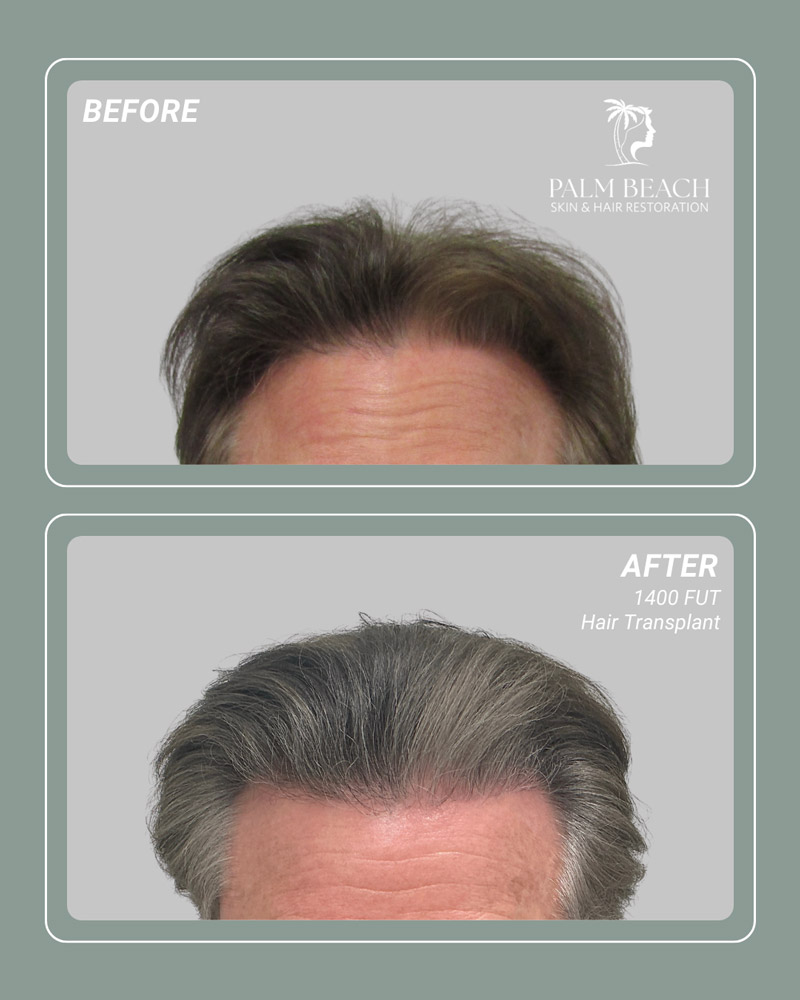
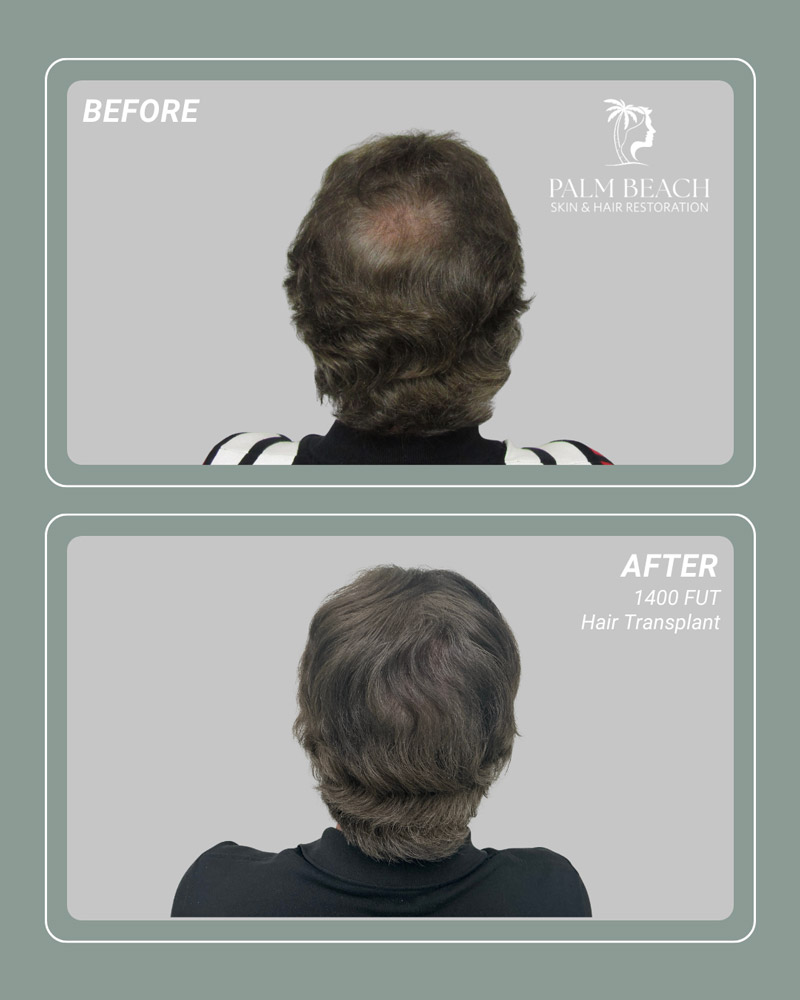
What Is FUT Hair Restoration?
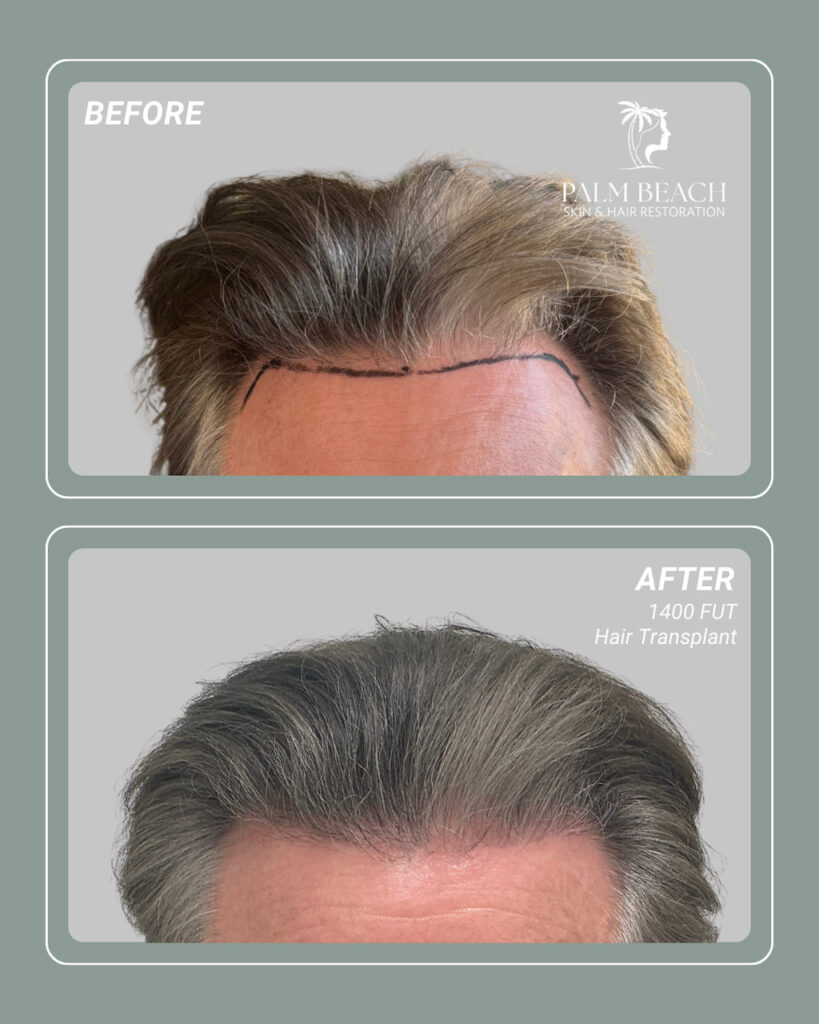
FUT, or strip method hair transplantation, involves carefully removing a narrow strip of scalp from the donor area (usually the back of the head), from which individual follicular units are microscopically dissected and transplanted into thinning areas.
This approach allows for the harvesting of a large number of grafts in a single session, often ideal for patients with more extensive hair loss or those seeking dense, lasting coverage.
What Is FUE Hair Restoration?
The FUE, or follicular unit extraction, method harvests individual hair follicles directly from the donor area using a small circular punch tool, leaving tiny dot-like scars that are virtually undetectable. These individual extractions are then transplanted into areas of thinning or baldness.
This minimally invasive technique is ideal for patients who prefer to wear their hair very short, want to avoid a linear scar, or need a smaller number of grafts for targeted restoration.
Meet Dr. Ramani
Experience elevated dermatologic care with Dr. Leena Ramani, a board-certified dermatologist and fellowship-trained hair transplant surgeon serving Palm Beach County. Known for her artistic eye and advanced expertise in both skin and hair restoration, Dr. Ramani blends evidence-based medicine with a refined aesthetic approach to deliver natural, timeless results.
Whether you’re seeking treatment for hair loss, skin conditions, or cosmetic enhancements, her patient-centered philosophy ensures personalized care in a calm, luxurious setting. Schedule your consultation today to discover how expert dermatology and artistry come together to help you look and feel your most confident.





FUT vs. FUE: Which Is Right for Me?
Dr. Ramani will help you determine the best technique based on your hair characteristics, scalp health, and personal preferences.
| Feature | FUT | FUE |
|---|---|---|
| Donor Area | A small strip was removed from the scalp (Shaving Not Required) | Individual follicles extracted (Shaving Required) |
| Scarring | Fine linear scar, hidden by hair | Tiny dot scars, nearly invisible |
| Ideal Candidate | Patients with advanced hair loss or thick donor hair | Patients who prefer shorter hair or smaller sessions |
| Recovery Time | Slightly longer | Typically faster |
| Result | High-density, natural coverage | Natural, flexible restoration |
FUT Recovery and Results
Recovery from FUT is straightforward and well-tolerated when performed under Dr. Ramani’s meticulous care. Her gentle technique and dermatologic expertise minimize discomfort and ensure the donor area heals smoothly.
- Sutures are removed after about 10 to 14 days.
- Mild tightness in the donor area fades within a week.
- Most patients resume normal activity within several days.
- Full hair growth begins around 3 to 4 months post-procedure, with visible within a year.
Why Patients Choose FUT
- Higher graft yield: FUT is excellent for achieving fuller density in a single procedure, yielding up to 4,000 grafts. FUE typically yields fewer grafts, up to 2,500 per session.
- Efficient for advanced hair loss: Suitable for patients needing maximum coverage.
- Long-term results: Both FUT and FUE hair restoration deliver strong graft survival and natural regrowth when performed by an expert.
- No shaving requirement: With FUT, a thin strip is taken from the donor area, and the surrounding hair is left long to conceal the sutures. The recipient area can also be placed without shaving, allowing you to maintain your existing hairstyle throughout the process. This makes FUT a particularly discreet option for patients who want minimal visibility during recovery while still achieving strong, dense results.
Dr. Ramani’s artistry ensures every graft is placed with meticulous attention to direction, density, and natural flow – blending seamlessly with your existing hairline.
Schedule Your Private Consultation
Learn whether FUT or FUE is the best path toward your goals with Dr. Leena Ramani at Palm Beach Skin and Hair Restoration in Jupiter, Florida. Serving Palm Beach and South Florida, Dr. Ramani delivers honest guidance, personalized treatment plans, and results that blend art and science seamlessly.
To get started, contact us online or call (561) 354-7392 today to book your hair restoration consultation and take control of your appearance with confidence.
FUT in Palm Beach County – Frequently Asked Questions (FAQs)
Is FUT still a common procedure?
Yes. FUT remains an excellent choice for patients with significant hair loss who want dense, long-lasting coverage – without having to shave their head at all, including the top.
With FUT, a thin strip of hair is removed from the donor area, and the surrounding hair is left long to conceal the sutures. The recipient area can also be placed without shaving, allowing you to maintain your existing hairstyle throughout the process. This makes FUT a particularly discreet option for patients who want minimal visibility during recovery while still achieving strong, dense results.
Will I have a visible scar?
A fine linear scar remains in the donor area, but Dr. Ramani’s precise closure technique and your natural hair will conceal it completely.
Is FUT or FUE hair restoration painful?
Both FUE and FUT are performed under local anesthesia, so patients experience minimal discomfort during the procedure itself. Most patients report only mild soreness in the donor and recipient areas for a few days following their hair restoration procedure, which is easily managed with prescribed pain medication. Recovery is generally well-tolerated, with many patients returning to work within a few days.
How long does recovery take after FUE compared to FUT?
Recovery from FUE is relatively quick compared to FUT, with most patients able to return to work within 3 to 5 days, depending on the job. Strenuous exercise and activities that cause excessive sweating should be avoided for about two weeks to ensure optimal healing and graft survival.
Does FUT provide permanent results?
Yes. The transplanted hair is permanent and continues to grow naturally for life.
Does FUE leave visible scarring?
Unlike FUT, which leaves a scar across the donor area, FUE leaves tiny, dot-like scars scattered throughout the donor area rather than a linear scar, making them virtually undetectable even with very short haircuts. Dr. Ramani uses advanced techniques to help your incisions heal and to help minimize your scars.
Can FUT and FUE be combined?
Yes. In specific instances, Dr. Ramani can use a hybrid approach, combining techniques for optimal density and coverage while preserving donor-area integrity.
When will I see results from my hair restoration procedure?
Transplanted hair typically sheds within 2 to 3 weeks after the procedure, which is a normal part of the process as the follicles enter a resting phase. New hair growth usually begins around 3 to 4 months post-procedure, with noticeable improvement by 6 months and final results visible in 12 to 18 months. Patience is key, as the transplanted follicles need time to establish a blood supply and produce strong, healthy hair.