

Alopecia Areata in Palm Beach, FL with Dr. Leena Ramani
Experiencing sudden or patchy hair loss can feel confusing, emotional and understandably personal. At Palm Beach Skin & Hair Restoration, board-certified dermatologist and fellowship-trained hair restoration specialist Dr. Leena Ramani offers a thoughtful, science-based approach to diagnosing and treating the symptoms of alopecia areata , one of the most common autoimmune causes of hair loss.
Dr. Ramani understands that alopecia areata affects far more than the scalp. It can impact confidence, self-image, and how your day-to-day life is in ways that aren’t always easy to talk about. That’s why she takes the time to listen, to understand your unique experience, and to guide you through what’s happening beneath the surface with empathy and genuine care.
To learn more about alopecia areata and treatment options with Dr. Ramani, we invite you to contact our office by calling (561)-354-7392 or completing our online consultation form.
Quick Links
What Is Alopecia Areata?
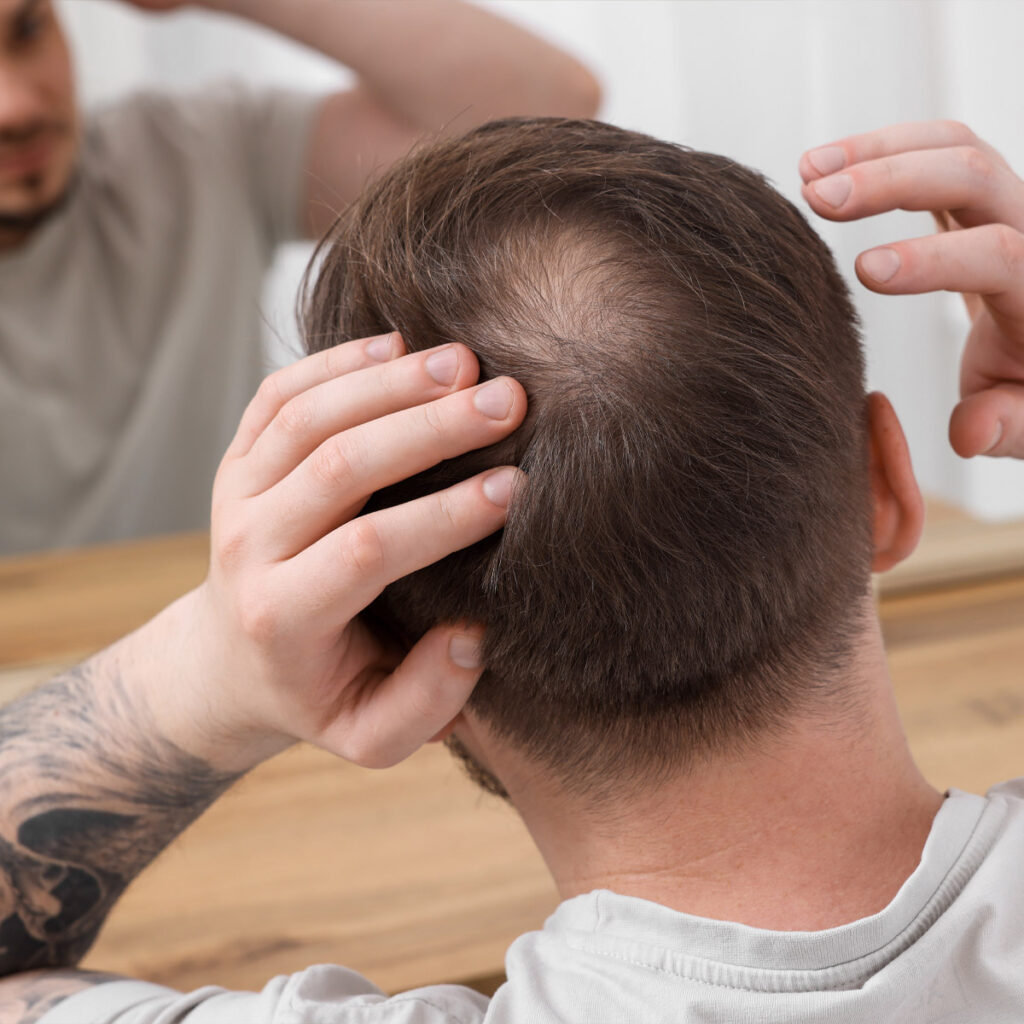
Alopecia areata (AA) is an autoimmune condition that causes the body’s immune system to mistakenly attack hair follicles, leading to sudden, patchy hair loss. These patches can appear on the scalp, eyebrows, eyelids, beard, or anywhere else where hair grows. For some people, the condition stays mild and temporary; for others, it may come and go in cycles or progress to more extensive hair loss.
What makes AA unique is its unpredictability. Hair may fall out quickly, regrow months later, and then shed again without warning. While the condition doesn’t affect overall health, it can have a significant emotional impact, especially when the hair loss is out of control and nothing seems to be working to stop it.
The good news is that AA is treatable, and many patients experience regrowth with the right care. As a board-certified dermatologist and hair restoration specialist, Dr. Ramani helps patients understand what’s happening beneath the surface and creates a personalized plan that supports both scalp health and hair regrowth.
What Causes Alopecia Areata?
- Genetics: Alopecia areata often runs in families. People with close relatives who have alopecia areata or another autoimmune condition are statistically more likely to develop it themselves.
- Immune System Triggers: Because alopecia areata is autoimmune, anything that influences the immune system, such as illness, inflammation, or other autoimmune disorders may contribute to their flare‑ups.
- Stress and Environmental Factors: Stress doesn’t cause alopecia areata on its own, but it can act as a trigger for some people. Environmental factors, infections, or major life changes can all play a role in activating the condition.
- Underlying Health Conditions: People with autoimmune conditions like thyroid disease, vitiligo, or eczema may have a higher risk of developing alopecia areata, suggesting there is a type of shared immune‑system pathway.
What Are the Common Signs and Symptoms of Alopecia Areata?
Alopecia areata often appears suddenly for many individuals, and its symptoms can feel confusing if you’re not sure what to look for. While the condition affects everyone differently, there are several hallmark signs that help distinguish it from other types of hair loss.
- Round or Oval Patches of Hair Loss: The most recognizable symptom is smooth, round or oval bald patches on the scalp. These areas usually appear without redness, scaling, or pain, which helps differentiate alopecia areata from other scalp conditions.
- Sudden or Rapid Shedding: Hair may fall out quickly. Many patients notice extra shedding in the shower, on their pillow, or when brushing their hair.
- “Exclamation Point” Hairs: Short, broken hairs that taper at the base may appear around the edges of bald patches. These are typically visible during a magnified scalp examination and are a classic sign of active alopecia areata.
- Patchy Loss Beyond the Scalp: Alopecia areata can affect eyebrows, eyelashes, the beard area, or other parts of the body. Some people experience diffuse thinning rather than complete patches.
- Nail Changes: Alopecia areata can affect eyebrows, eyelashes, the beard area, or other parts of the body. Some people experience diffuse thinning rather than complete patches.
- Unpredictable Regrowth Patterns: Hair may regrow on its own with sometimes white or lighter pigmentation at first, then shed again during future flare‑ups.
Meet Dr. Ramani
Experience elevated dermatologic care with Dr. Leena Ramani, a board-certified dermatologist and fellowship-trained hair transplant surgeon serving Palm Beach County. Known for her artistic eye and advanced expertise in both skin and hair restoration, Dr. Ramani blends evidence-based medicine with a refined aesthetic approach to deliver natural, timeless results.
Whether you’re seeking treatment for hair loss, skin conditions, or cosmetic enhancements, her patient-centered philosophy ensures personalized care in a calm, luxurious setting. Schedule your consultation today to discover how expert dermatology and artistry come together to help you look and feel your most confident.





Types of Alopecia Areata
Alopecia areata doesn’t look the same for everyone. While many people experience small, round patches of hair loss, others may notice more widespread thinning or loss across different areas of the body.
Patchy Alopecia Areata
The most common form is patch alopecia areata. This type causes one or more smooth, round bald spots on the scalp or other areas where hair typically grows the fullest. These patches may appear suddenly and can grow, shrink, or shift over time.
Alopecia Totalis
In alopecia totalis, hair loss extends beyond isolated patches and affects the entire scalp. Patients may lose most if not all of the hair on their scalp, including eyebrows and eyelashes in some cases.
Alopecia Universalis
This is the most extensive form of the condition, resulting in complete loss of hair across the entire body, including the scalp, brows, lashes, beard, and body hair. While less common, it is still treatable, and many patients see improvement with the right diagnosis and therapies.
Ophiasis Alopecia Areata
Ophiasis presents as a band‑like pattern of hair loss along the sides and lower back of the scalp. Because of its unique shape and location, it may behave differently than typical patchy alopecia areata and sometimes requires a more tailored treatment plan.
Diffuse Alopecia Areata
Instead of distinct patches, diffuse alopecia areata causes sudden, overall thinning across the scalp. It can be mistaken for other types of hair loss, which is why expert evaluation is so important.
Alopecia Areata Incognita
Incognita is a rare form that also causes widespread thinning but tends to progress more rapidly. It often affects women and can be difficult to distinguish from telogen effluvium without undergoing a detailed scalp exam.
What to Expect from an Alopecia Areata Consultation with Dr. Leena Ramani
During your consultation with Dr. Ramani, her goal is to understand your experience with alopecia areata, including when you first noticed changes, how quickly the patches appeared, how it’s affected your life, and what you’re hoping to achieve moving forward. Nothing is rushed, and nothing is dismissed.
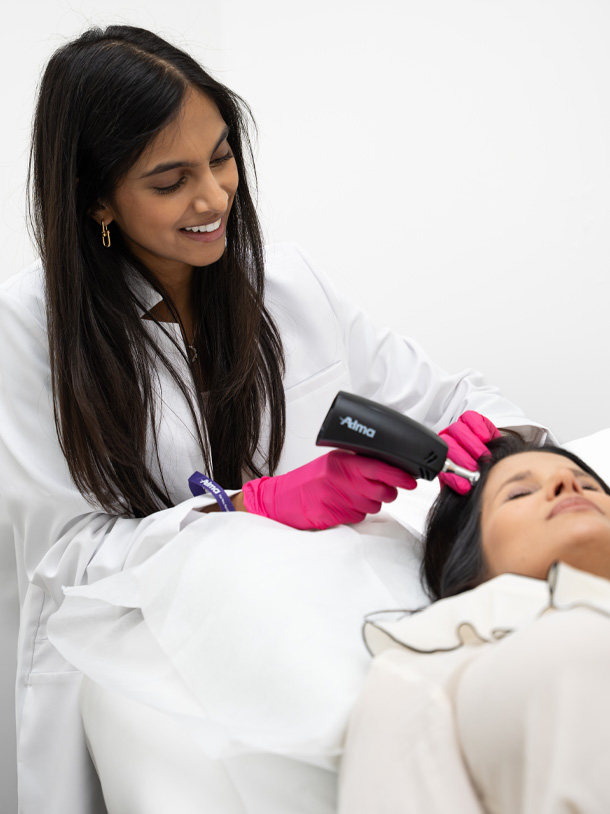
From there, Dr. Ramani performs a detailed scalp evaluation using trichoscopy and digital magnification that allows her to examine your hair follicles, hair density, and growth patterns up close. She walks you through everything she sees in real time, turning what can feel intimidating into an educational, empowering experience. You’ll gain a better understanding of what’s happening beneath the surface and why your hair is behaving the way it is.
Because alopecia areata can be unpredictable and influenced by multiple factors, Dr. Ramani breaks down her findings in a clear, understandable way. By the end of your consultation, you should have a much clearer picture of your alopecia areata diagnosis and how to go about moving forward. Together, you’ll explore treatment options tailored to your needs and comfort level, which may include medical therapies, targeted scalp treatment, lifestyle recommendations, or advanced hair restoration solutions. Most importantly, you’ll leave your consultation feeling informed, supported, and hopeful knowing you have a partner in your alopecia areata journey who understands both the medical and emotional side of this diagnosis.
Alopecia Areata Treatments at Palm Beach Skin & Hair Restoration
Because alopecia areata is an autoimmune disease, the most effective treatments are those that calm inflammation, modulate the immune response, and support follicular recovery. At Palm Beach Skin & Hair Restoration, Dr. Ramani offers science-based treatments designed to target these specific factors.
Topical and Injectable Medical Therapies
Dr. Ramani often builds a customized medical plan that may include prescription treatments and targeted nutraceuticals to help treat the symptoms of alopecia areata and support long-term hair growth. These therapies help stabilize shedding, improve density, calm inflammation, and strengthen the foundation for any in-office procedures you choose to pursue.
Newer Immunomodulating Medications
For more severe cases, newer immunomodulating medications, like JAK inhibitors, may be required to effectively control the immune pathways that cause Alopecia Areata. These therapies require a detailed discussion of the risks, benefits, and contraindications and close lab monitoring is required while on therapy. Dr Ramani can help you decide if these types of medications are right for you.
Who Is a Good Candidate for Alopecia Areata Treatments in Palm Beach, FL?
Alopecia areata can affect anyone, at any age, and the good news is that most people experiencing this condition are excellent candidates for treatment. If you’ve noticed sudden patchy hair loss, thinning in specific areas, or recurring episodes of shedding, you’re already in the right place to explore your options.
You may be a strong candidate for treatment if:
- You’re experiencing active or recent patchy hair loss on the scalp, eyebrows, beard, or body
- Your hair loss has come on suddenly or seems to appear in round or oval patches
- You’ve had episodes of alopecia areata in the past and want to manage or prevent future flare‑ups
- You’re looking for medical guidance to understand what’s happening and how to support regrowth
- You want a personalized plan rather than a one‑size‑fits‑all approach
- You’re open to medical therapies, supportive treatments, or lifestyle adjustments that can improve outcomes
Why Choose Dr. Leena Ramani for Your Alopecia Areata Treatment?
As a board-certified dermatologist and fellowship-trained hair restoration specialist, Dr. Leena Ramani has an advanced understanding of the complex biology behind autoimmune hair loss. She stays at the forefront of emerging research and treatment options, giving her patients access to the most effective, science-backed therapies available today. Her goal isn’t just to treat the symptoms; it’s to help you understand what’s happening beneath the surface and create a plan that supports long-term scalp and follicle health.
Alopecia areata can be incredibly unpredictable, emotional, and deeply personal. With Dr. Ramani, you’re not navigating it alone. You’re working with a specialist who combines medical excellence with empathy, artistry, and a genuine commitment to helping you feel confident in your hair and in yourself.

Before & Afters
Schedule Your Alopecia Areata Consultation with Dr. Leena Ramani in Palm Beach, FL
Our hair holds so much value for aesthetic and emotional reasons for both men and women. Navigating the uncertainties of hair loss due to alopecia areata doesn’t have to be something that you do alone. Dr. Leena Ramani is here to help you understand what’s happening, explore effective treatment options, and create a plan that supports real regrowth.
Schedule your consultation today and discover what’s possible. We invite you to call our office at (561) 354-7392 or complete our online consultation form.
Alopecia Areata FAQS
Can or will alopecia areata go away on its own?
Many people experience spontaneous regrowth, especially with mild or patchy alopecia areata. However, because the condition is unpredictable and can return at any time, early evaluation with a dermatologist like Dr. Ramani can help stabilize shedding and support more consistent regrowth and prevent relapse.
Does alopecia areata cause itching, burning, or pain?
Most people with alopecia areata do not experience discomfort, but some notice mild tingling, itching, or a “sensitive” feeling in areas where hair is about to shed. These sensations are typically temporary and related to inflammation around the follicles.
Can alopecia areata affect eyebrow or eyelash growth?
Yes. Alopecia areata can impact any hair‑bearing area, including the eyebrows and eyelashes. Treatments, such as medical therapies, targeted topical medications, and supportive growth treatments, can help encourage regrowth in these delicate areas.
Is alopecia areata contagious?
No, autoimmune conditions like alopecia areata are typically not contagious and cannot be spread through contact, sharing personal items, or being near someone with the condition. It is an autoimmune disorder, meaning it stems from the body’s own immune response, not an infection.
Can lifestyle changes help manage alopecia areata flare‑ups?
While lifestyle changes cannot cure alopecia areata, reducing stress, supporting overall immune health, and maintaining a gentle hair‑care routine may help minimize triggers and support treatment results. Dr. Ramani often incorporates personalized lifestyle guidance into her treatment plans.