

Skin Cancer Treatment in Palm Beach, FL with Dr. Leena Ramani
Skin cancer can feel overwhelming the moment it enters the conversation, but early knowledge and expert care can make all the difference. Today’s advances in dermatology allow treatment of most skin cancers with precision and success, particularly when they’re identified early. Under the skilled care of Dr. Leena Ramani at Palm Beach Skin & Hair Restoration, patients receive thorough evaluation, accurate diagnosis, and access to advanced treatment options, including MOHS surgery when appropriate. Her goal is simple: empower every patient to move forward with confidence, clarity, and a renewed commitment to protecting their skin for the long term.
To learn more about the different types of skin cancer treatment options in Palm Beach County, call Palm Beach Skin & Hair Restoration at (561) 354-7392 to schedule your skin cancer consultation with Dr. Ramani or complete our online form.
What to Expect During Skin Cancer Screening at Palm Beach Skin & Hair Restoration?
During a skin cancer screening at Palm Beach Skin & Hair Restoration, you’ll be welcomed into a warm, judgment-free environment where you should feel comfortable sharing any symptoms that you’re experiencing, including any changes in size or appearance of the suspicious moles or skin lesions in question. It’s essential to talk to Dr. Ramani if you’re experiencing any itching, pain, scabs, or regular bleeding on the spot. She will also discuss if you have a family history of skin cancer and what type of skin cancer runs in your family.
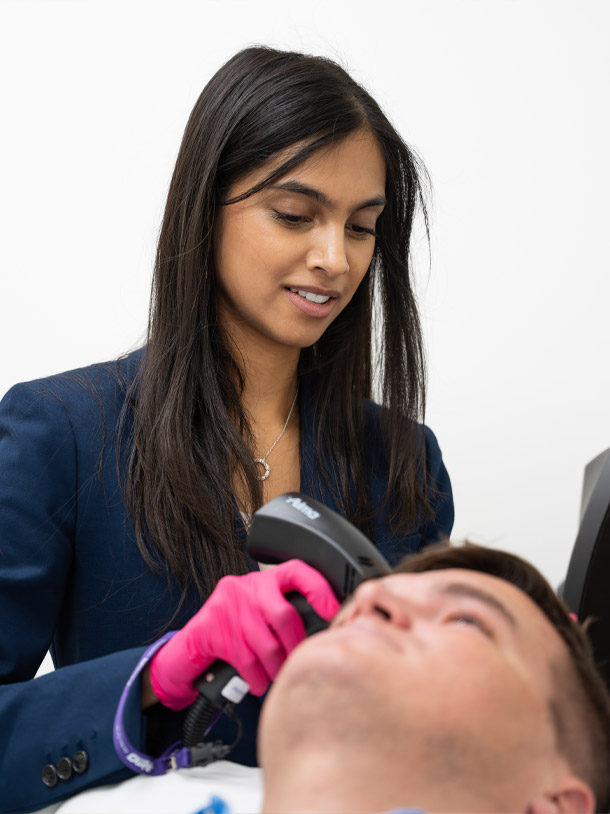
A physical examination will be conducted on the growth(s) in question, and measurements will be taken and documented for your personal file. A special microscope called a dermatoscope may also be used to evaluate the growth. Dermatoscopes help improve accurate diagnosis and determine if a biopsy is the appropriate next step in your treatment. The rest of your body will also be examined to ensure all potential growth, lesions, tumors, or suspicious spots are documented as well. Dr. Ramani will also discuss your daily habits, including how much time you spend in the sun, whether you use sun protection regularly, and other skincare habits you’ve adopted into your daily routine.

How Is a Skin Biopsy Done with Dr. Leena Ramani?
A skin biopsy is the most accurate way to diagnose the type of skin cancer that you have. Dr. Ramani performs all skin biopsies using a local anesthetic for your physical and emotional comfort. During a biopsy, a part of or the entire growth will be removed either by a gentle scraping or a punch biopsy and sent to a laboratory for testing. You may be left with a small wound that is carefully bandaged. Some soreness is normal and you’ll also be provided with wound instructions to ensure minimal scarring in the area. Our office will notify you as soon as your results are in from the biopsy, so you don’t have to sit in anticipation for too long.
Meet Dr. Ramani
Experience elevated dermatologic care with Dr. Leena Ramani, a board-certified dermatologist and fellowship-trained hair transplant surgeon serving Palm Beach County. Known for her artistic eye and advanced expertise in both skin and hair restoration, Dr. Ramani blends evidence-based medicine with a refined aesthetic approach to deliver natural, timeless results.
Whether you’re seeking treatment for hair loss, skin conditions, or cosmetic enhancements, her patient-centered philosophy ensures personalized care in a calm, luxurious setting. Schedule your consultation today to discover how expert dermatology and artistry come together to help you look and feel your most confident.





What Are The Types of Skin Cancer?
- Basal Cell Carcinoma: Basal Cell Carcinoma is the most common and frequently diagnosed type of skin cancer. It’s commonly identified by its pink, pearly, or translucent appearance that eventually scabs over, bleeds, and ulcerates. Typically, it’s not life-threatening, but this type of cancer can be harmful and affect surrounding tissue, and may lead to uncomfortable scarring or disfigurement.
- Squamous Cell Carcinomas: Squamous Cell Carcinomas can look similar to basal cell carcinomas; however, they can be much more aggressive. Although rare, squamous cell cancer can spread internally, leading to much bigger problems down the line if not treated promptly, so early detection is key. Additionally, patients who have or have had squamous cell carcinomas are usually monitored very closely to ensure that they haven’t spread or reoccurred. Medical conditions or medications that suppress the immune system can also increase the risk of developing skin cancers, specifically squamous cell carcinomas
- Melanoma: Melanoma is a type of skin cancer that develops from a mole or on normal skin. It can appear as a pigmented or unpigmented lesion that can have asymmetry, irregular borders, multiple colors, uneven thickening of the skin, or grow drastically in a short amount of time. If you have moles or other spots on any part of your body, watch them closely and always bring them up during a trip to your doctor or dermatologist. Early detection is critical when it comes to melanoma. Another good practice is taking pictures of any suspicious moles so that you can easily monitor any changes.
What Are The Types of Skin Cancer Treatments at Palm Beach Skin & Hair Restoration?
Dr. Ramani typically performs outpatient surgery with local anesthesia as the first line of treatment for skin cancer patients. During the treatment, cancerous cells and a minimal amount of surrounding skin are removed to ensure all the cancerous cells are removed.
Other types of cancer cell removal treatments include:
- Simple excision: Simple excision surgery involves removing the skin tumor and a minimal amount of surrounding skin, which is sent to a lab for examination by a pathologist. The skin is then stitched back together in a meticulous manner to minimize scarring.
- Wide excision: A wide excision treatment involves removing the skin tumor and a wider margin of surrounding skin. This type of skin cancer surgery is typically used for melanoma cases to ensure all cancerous cells are removed.
- Shave excision: Shave excision involves scraping the skin tumor off with a razor-like tool. It causes the least amount of trauma to the skin and is generally only used if the cancer isn’t deeply rooted in the skin. No stitches are involved.
- Mohs surgery: Mohs surgery involves layers of skin being removed at a time and analyzed under a microscope until no cancer cells are detected. It can take time, but it’s the most effective for ensuring all the skin cancer cells are removed effectively.
- Curettage and Electrodessication: Curettage and electrodessication involve scraping the cancerous cells away and destroying the base layer of skin with an electric current. This type of procedure takes about 10 to 15 minutes, and no stitches are involved.
- Topical Chemotherapy: Chemotherapeutic creams can be applied in the comfort of your home for certain superficial skin cancers.
Why Choose Dr. Leena Ramani for Your Skin Cancer Treatment in Palm Beach?
As a board-certified dermatologist, Dr. Leena Ramani has advanced training in treating a variety of types of skin ailments and skin cancers. Her focus is to provide innovative treatment options that treat medical or cosmetic issues to her Palm Beach patients in a comfortable, inviting, and judgment-free environment. She actively takes your medical history, treatment goals, and lifestyle into consideration when discussing the best treatment options. Her goal goes beyond skin cancer treatment, extending to skin cancer education and overall prevention from recurrence so that her patients can enjoy a bright and skin cancer-free future.
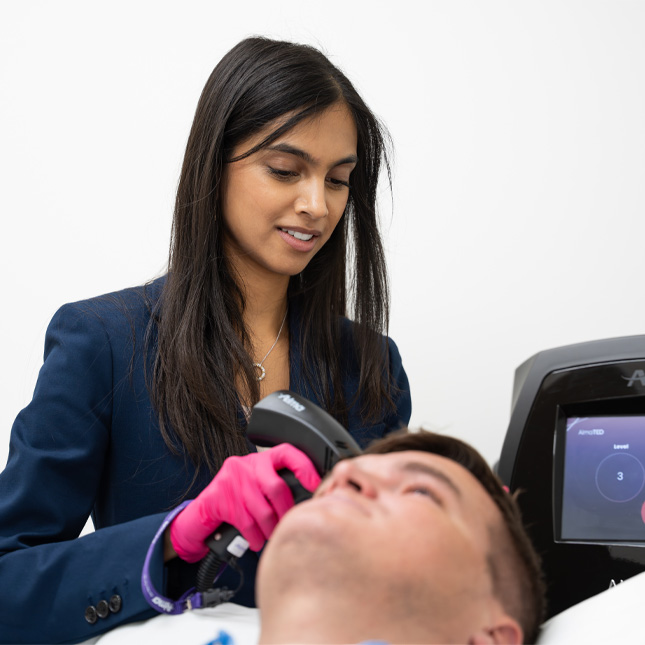
Her personal philosophy is to provide well-rounded, comprehensive dermatological and medical care for the diverse community in Palm Beach County and beyond. She creates a unique dermatological experience using quality, science-based treatments and state-of-the-art equipment and care that are tailored to each patient’s individual needs.
Schedule Your Skin Cancer Consultation at Palm Beach Skin & Hair Restoration in Palm Beach, FL
No matter where you are in life, skin cancer can be a frightening diagnosis, but Dr. Ramani and her team at Palm Beach Skin & Hair Restoration are here to guide you and make the entire experience as comfortable and positive as possible, so you can get back to living life joyously.
If you have any questions or suspect that a mole, spot, or lesion may be skin cancer, don’t hesitate to seek medical help. Contact us today at (561) 354-7392 or schedule a consultation at our practice in Palm Beach County.
Skin Cancer Treatment FAQs
Why are regular skin cancer screenings important?
According to the American Cancer Society, the sooner skin cancer is diagnosed, the better the outcome. They strongly recommend skin cancer screenings annually or more frequently for patients with a history or family history of skin cancer. The sun isn’t the only cause of skin cancer. Different skin cancers can develop due to genetic factors, underlying medical conditions, medications, immunosuppression, chronic wounds, burns, and more. When detected early, skin cancer can be more easily treated, and you’ll have a chance at the best possible outcomes.
What are common signs of skin cancer?
Most people have some kind of mole, freckle, or pigmentation on their skin, but that doesn’t automatically mean they are ominous. In fact, most are just quirky characteristics of everyone’s individual skin. If you’re not a trained dermatologist, it can be difficult to identify if a mark is normal or if it should be examined by a doctor. The biggest indication that a mark could be cancerous is if it changes quickly or gradually over time. To help stay ahead of things, do a monthly self-examination and take a monthly picture of your moles or pigmentation so you can notice any changes to your moles immediately.
When performing self-exams, follow the “ABCDE” rule:
- Asymmetry
- Border
- Color
- Diameter
- Evolution
If I get sunburned, will it automatically turn into skin cancer?
Is a higher SPF better than a lower SPF?
The number on your sunscreen bottle doesn’t have anything to do with how many minutes of SPF you have from when you apply it. For instance, a bottle of SPF 15 doesn’t equal 15 minutes of guaranteed protection. Here’s an easy way to think about it:
- If your skin would normally burn in 10 minutes without sunscreen, SPF 30 means it would take about 30 times longer to burn when applied correctly.
There are two types of ultraviolet rays: UVA and UVB, and they penetrate the skin differently. The SPF rating on your bottle of sunscreen actually refers to UVB rays. If the number on the bottle says SPF 15, it blocks 93% of UVB radiation. If the label reads SPF 30, it blocks 97% of UVB radiation. SPF 50 blocks 98%. SPF 30-50 is generally enough protection. The American Academy of Dermatology (AAD) recommends always using sunscreen with SPF 30+ that is broad-spectrum and water-resistant.
Is skin cancer always life-threatening?
It is rare for someone to receive a terminal diagnosis from basal cell or squamous cell carcinoma. A subset of “high-risk” squamous cell carcinomas has the potential to become life-threatening, so early detection and close monitoring are important. Melanomas, if discovered at a later stage, can be associated with a higher risk of mortality. If left untreated, melanoma can spread to organs and infiltrate the bloodstream. Advanced genomic profiling and prognostic testing are available and performed at Palm Beach Skin & Hair Restoration for Melanomas. Most “thin” or “early stage” melanomas are treatable with surgery.